

Watch how young people made a difference for Call to Earth Day
All over the world, a new generation is taking a stand to protect the environment.
On November 10, 2021, CNN held the first-ever Call to Earth Day. Celebrating a planet worth protecting, CNN partnered with schools, individuals, and organizations across the world to raise awareness of environmental issues.
From every region of the globe, people united on behalf of the environment, and young people showed how they are fighting for the world they will inherit. By planting trees, collecting litter, sharing stories and protecting biodiversity, they are leading the way to a more sustainable future.
At a time when our planet is facing unprecedented environmental challenges, these events, led by the next generation of eco heroes, are cause for hope.
For the first-ever Call to Earth Day
more than 0 events took place worldwide
Call to Earth Day around the world
Explore the events by region
Tap a region to see a selection of activities.
Select a region from above or a country on the map
Towering hundreds of feet above the ground in the majestic forests of California and southern Oregon are the giant redwoods, the tallest organisms on Earth.
In ideal conditions, they can live over two millennia, but according to US non-profit Save the Redwoods over 95% of natural redwood forest in the US has been lost to deforestation and destructive wildfires.
“Redwoods – we need them!”
David Milarch, founder of the Archangel Ancient Tree Archive, has been taking samples from the largest redwoods in the US to help restore lost forests. At his lab in Copemish, Michigan, a single tree sample can be grown into an unlimited number of saplings using a technique called micro-propagation.
For Call to Earth Day, Milarch planted a future forest of redwoods with the help pre-schoolers from Cow Hollow School, San Francisco.

The beauty of tree planting is that anyone can get involved. “I know how to make a hole,” said four-year-old “tree-schooler” Ashley Kamerer. With that ability, she has all the skills she needs to be a part of the replanting effort. Kamerer has a clear message about these colossal trees: “Redwoods – we need them.”
Milarch and the Archangel Ancient Tree Archive hope to partner with schools around the world to replant millions of redwoods. With the help of the tree-schoolers, a dozen new redwoods were planted for Call to Earth Day. “Those trees in 10 years will be 30 or 40 feet tall,” said Milarch.
“I think the whole world needs that message of hope,” he said. “If a three or four-year-old can do it, what’s your excuse?”
Highlights: North america
Tap to play
Rollover to play

Eco Urban Gardens United States
Tap to play
Rollover to play
Luz of Stella Lucci, Inc. United States
Tap to play
Rollover to play
Paddle Out Plastic United States
The world’s youth are fast becoming the protagonists in the story of climate action. For Call to Earth Day, international non-profit Restless Development hosted a global workshop on eco-storytelling, giving a platform to five young activists from communities severely affected by climate change.
“Sharing honest stories of climate change … is essential to reconnect us with each other and with nature”
One of these was Inés Yábar, 25, an environmentalist based in Lima, Peru. Yábar says that in her country, the effects of climate change are evident: “Floods on the coastline, glaciers melting in the mountains and rainforest fires in the Amazon,” she said. “Everyone in Peru is at risk.”
“It’s every human’s role to protect the world that we live in and there is no time to lose, which is why us young people have stepped up,” Yábar added.

The workshop showed hundreds of young people around the world how to use their stories to advocate for climate action.
“Sharing honest stories of climate change … is essential to re-connect us with each other and with nature,” said Yábar. “As young people, sharing our own eco-stories is really powerful because we can ground climate change in the realities that make people care about this crisis. I believe everyone has a story to share.”
Highlights: South america
Tap to play
Rollover to play
Kids Saving The Rainforest Costa Rica
Tap to play
Rollover to play
HUNAB proyecto de vida AC Mexico
Tap to play
Rollover to play
Global Penguin Society Argentina
Anyone who has ever been to the beach, spent the day at a lake or walked beside a canal will have seen how plastic waste impacts water systems. Around 8 million tons of plastic waste finds its way into the open ocean every year.
“Individual action is not enough – in order to solve massive problems such as plastic pollution, we need a system change and a fundamental change in our mindset”
On the Norwegian coastline a high proportion of this waste is fishing gear. For Call to Earth Day, UWC Red Cross Nordic, a school on the west coast of Norway, took 18 young volunteers from 16 countries on a wooden sailboat along the coast, to see the damage first-hand and to undertake an ambitious week-long fjord clean-up.

The volunteers collected a ton of waste in just a few days, but they were disturbed by the scale of plastic pollution, even in remote regions.
“We worked five days in harsh weather, but in the end it was an extremely rewarding experience,” said volunteer Kaapo Haapanen, aged 17. “Unfortunately, it’s still a fact that individual action is not enough – in order to solve massive problems such as plastic pollution we need a system change and a fundamental change in our mindset.”
The world’s waterways are facing a crisis of plastic pollution. But with a push for awareness led by youth environmental groups, fjords free from marine litter can be a reality.
Highlights: Europe
Tap to play
Rollover to play
Wind Europe Belgium
Tap to play
Rollover to play
Finnish Schools Int. Kosovo Kosovo
Tap to play
Rollover to play
UWC Red Cross Nordic Norway
In the rust-coloured dirt of Uganda, Nyombi Morris, 23, has planted over 7,000 trees this year alone.
For the past two years, Morris has been buying native plants and seeds from community gardens and local gardeners. Restoring soil, rejuvenating habitats and improving quality of life for local communities are his priorities.
“Trees are the best technology in fighting climate change”
“I plant trees because it is not expensive, it is accessible environmental action,” said Morris. “It is easy to do and they are easy to take care of.”
He has worked with 13 schools across Uganda, teaching children the dangers of environmental damage and helping them to plant fruit trees. It may take decades for the trees to bear edible fruits, but the anticipation of sweet and juicy oranges is enough to engage a generation of children to do what Morris believes is key to saving the planet – plant trees.

Rapid population increase and over-development have led to deforestation in Uganda. For Call to Earth Day, Morris and a group of volunteers planted 500 trees in Jinja city, in the south of the country.
Forest loss and damage is responsible for around 10% of global warming, according to the WWF, and has been connected to flooding and desertification worldwide. Morris wants to inspire a massive global effort to restore forests, some of nature’s most powerful carbon stores. “Trees are the best technology in fighting climate change,” he said.
Highlights: Africa
Tap to play
Rollover to play
Chisipite Senior School Zimbabwe
Tap to play
Rollover to play
University of Seychelles Seychelles
Tap to play
Rollover to play
Ewi Stephanie Lamma Cameroon
Every minute, 1 million plastic bottles are sold globally, while five trillion single-use carrier bags are used each year. Beirut is a city that feels the impact of non-sustainable consumption more than many other places. In recent years, Lebanon has been experiencing a crisis in waste management, with only around 8% of municipal waste recycled.
“Every time there’s a high tide, the waves bring in the garbage to the shores”
Beirut-based humanitarian group Ahla Fawda has been inspiring youth-led community clean-ups since 2006. For Call to Earth Day, the group led a huge beach clean, and a program where people were given food parcels in exchange for recyclables. It also organized a litter-picking day across 12 districts of Beirut – which collected at least 220 pounds of rubbish and turned the city’s trash bins into works of art to encourage responsible waste management.

The group’s 27 beach-cleaning volunteers were spontaneously joined by around 100 local children and young adults, demonstrating how simple acts can snowball to generate a bigger impact.
“Every time there’s a high tide, the waves bring in the garbage to the shores and we couldn’t walk on the sands because of glass, wood and nails,” said Beiruti Ali Hussain, 14, who took part. “Ahla Fawda came and cleaned our shoreline. We saw and said ‘we can clean like them.’”
Highlights: The Middle East
Tap to play
Rollover to play
Brighton College AD UAE
Tap to play
Rollover to play
Ahla Fawda Lebanon
Tap to play
Rollover to play
Green Factor Lebanon Lebanon
Ten-year-old Hamshini Pathmaruben looks tiny next to the pile of rubbish she collected from her local waterway in rural Malaysia. She cleans it up every week, and she is running out of patience with plastic waste.
A 2020 study by international researchers estimated that even with global efforts to reduce plastic consumption, there will be 710 million metric tons of plastic polluting the environment by 2040.
“Every single person needs to make an effort to save our planet”
Pathmaruben is a member of the World Association of Girl Guides and Girl Scouts (WAGGGS). Led by young activists like Pathmaruben, WAGGGS has taken on the international Plastic Tide Turners Challenge, a UN initiative that asks young people to establish their own projects to tackle plastic pollution.
For Call to Earth Day, Girl Guides around the world planted trees, cleaned beaches, and led community awareness events. Like many young girls across the WAGGGS network, Pathmaruben cares deeply about the environment and is dedicated to looking after natural spaces in her neighborhood.

“My recommendation to people is to say no to plastics,” Pathmaruben said. “If you can’t say no to plastics, the least you could do is to dispose of your waste properly.”
“We only have one Earth,” she adds. “No effort is too small. Every single person needs to make an effort to save our planet.”
Highlights: Asia
Tap to play
Rollover to play
Nanjing International School China
Tap to play
Rollover to play
Jakarta intercultural School Indonesia
Tap to play
Rollover to play
Shaws Preschool Singapore
The South Pacific island of Rarotonga is experiencing an outbreak of crown-of-thorns starfish, one of the largest species of starfish in the world and a major cause of coral decline across Oceania. If not controlled, the starfish will decimate the coral reefs off the coast of the island.
On land, Rarotonga is battling invasive plants such as the grand balloon vine and the African tulip, which have pushed out native species.
“The future is uncertain. But what is certain is I will be a part of the solution”
Environmental group Kōrero O Te `Ōrau was founded in 2017 on Rarotonga with a mission to protect the culture, environment and natural resources of the Cook Islands. Its name translates to “knowledge of the sky, land, and sea.”
For Call to Earth Day, the group’s young Māori students led a project to clear invasive species and repopulate the land with native bananas, known as ‘ūtū. They also removed starfish from the reef to use as fertilizer for the newly cleared plantation.

The Cook Islands have a negligible carbon footprint, but they are threatened by rising sea levels as a result of climate change caused by carbon emissions from developed countries.
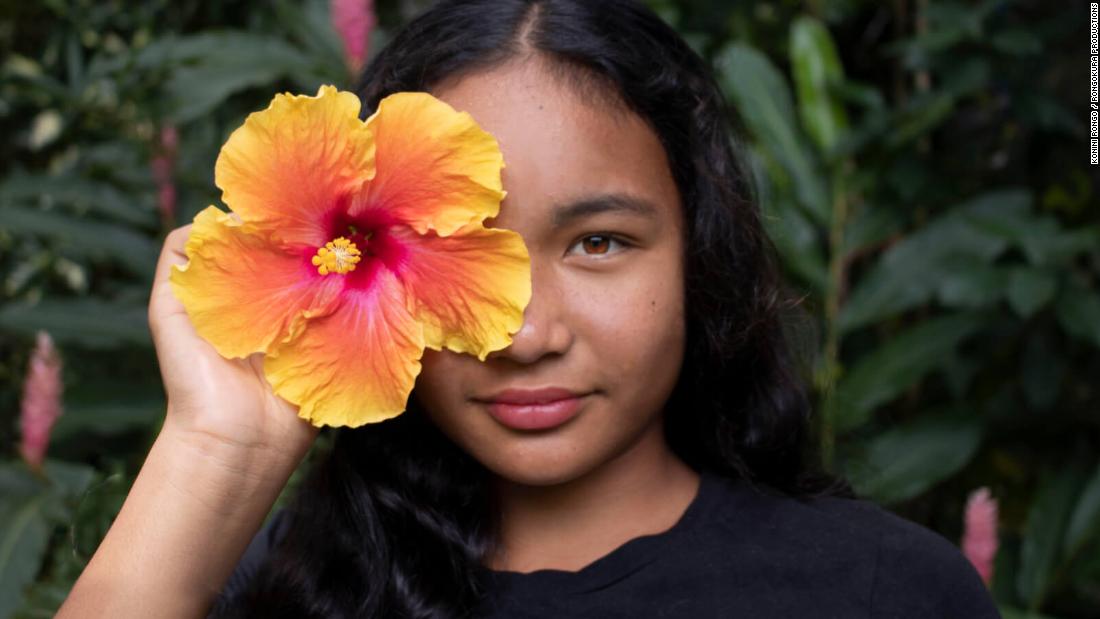
“I am a child of two worlds — a Western world on my mother’s American side and a traditional world on my father’s Māori side,” says Raetea Rongo, a 12-year-old member of Kōrero O Te `Ōrau. “Climate change has made my two worlds collide, and the future is uncertain. But what is certain is I will be a part of the solution.”
That certainty is shared by a new generation around the world that is leading the way for a healthier planet, and proving that you are never too young to protect the Earth.
Highlights: Oceania
Tap to play
Rollover to play
Kōrero o te ’Ōrau Cook Islands
Tap to play
Rollover to play
Pahina Wuzi Forest Papua New Guinea